Swaraaj Micro Nutrient Series
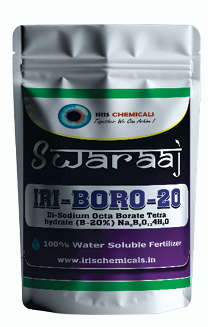
IRI-BORO-20 (DOT-20%) Di-Sodium Octa Borate Tetra hydrate (B-20%) Na B O 4H O
•An essential nutrient for flower and fruit development.
•Reduces flower & fruit dropping.
•Promotes growth & development, especially in apical
buds.
•Enhances uniformity of color, shape & size of fruits.
•Prevents rotting and cracking of fruits.
•Di-Sodium Octa Borate Tetra Hydrate (B-20%) improves
cell division at root tips, leaf and bud development.
•It also enhances sugar transport rates via
photosynthesis in the roots region.
•Additionally, it regulates hormone levels in plants
|
Boron (as B) % by weight, min.
|
20
|
|---|---|
|
Matter insoluble in water % by weight, max.
|
1
|
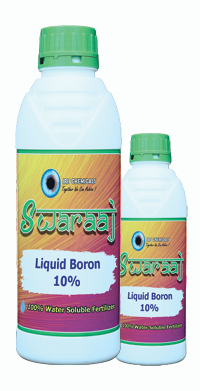
Liquid Boron 10%
•Liquid Boron for effective maintenance of Boron levels in
plant tissues or for rapid correction of Boron deficiencies
in deficient crops.
•Liquid Boron is a unique stabilizing agent and can be
directly applied to foliage or soil. It is compatible with
most agricultural chemicals.
•Foliar application of Boron is more efficient than soil
application because the former avoids the formation of
complex soil borates.
•Liquid Boron is normal water soluble and rapidly
absorbed by the foliage and utilized by the plant.
•Frequent foliar applications of small amounts are more
effective than larger infrequent treatments.
|
Total Nitrogen % as N
|
10.0
|
|---|---|
|
Boron (as B) % by weight, min.
|
10
|
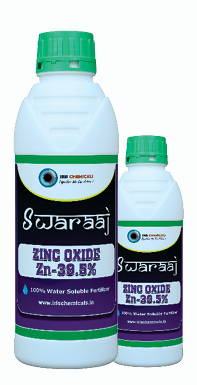
Zinc Oxide (Zn-39.5%)
• Zinc oxide is a source of Zinc, an essential micronutrient
required for various biochemical and physiological
processes in plants. Zinc plays a crucial role in enzyme
activation, protein synthesis, hormone regulation, overall
plant growth and development.
• The concentration of 39.5% zinc in the suspension,
concentrate indicates that a significant portion of the
product is elemental zinc derived from Zinc oxide.
This high Zinc content makes it an effective source of Zinc
for plants.
• Zinc oxide suspension concentrate can be used as a seed
treatment to provide Zinc to germinating seeds & seedlings.
This promotes early Zinc uptake and supports healthy
root and shoot development.
|
Phosphorous
|
24%
|
|---|---|
|
Zinc (as Zn) as percent by wieght, min
|
39.5
|
|
pH(5% Solution) @ 20 C
|
9.0+1
|
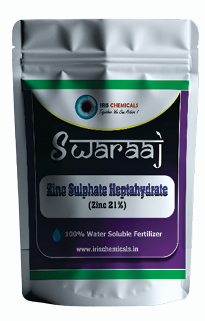
Zinc Sulphate Heptahydrate (Zn-21%)
Zinc Sulphate Heptahydrate plays a crucial role in
agriculture, benefiting both crops and soil.
Advantages as below:
• Zinc is an essential micronutrient for plant growth
increased crop yields.
• Zinc sulphate helps regulate the pH level in soil.
• Green Leaf Color and Fruit Yields: Early-stage green
coloration of leaves is crucial for photosynthesis.
• Zinc sulphate prevents deformities and enhances the
appearance of fruits.
|
Nitrogen % by weight, min.
|
14.0
|
|---|---|
|
Zinc (as Zn) as % by weight, min.
|
21
|
|
Sulphate Sulphur (as S) % by weight, min.
|
10
|
|
pH (5% Solution) @ 20C
|
4.0
|
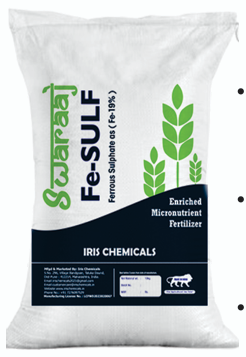
Ferrous Sulphate (Fe-19%)
• Ferrous Sulphate is commonly used as an iron
fertilizer in agriculture to supply plants with a readily
available form of iron, which is an essential
micronutrient for plant growth and development.
• Ferrous form of Iron in Ferrous Sulphate is more
soluble and easily absorbed by plants compared to
Ferric Iron (Fe3+), it is particularly effective in
correcting iron deficiencies in plants.
• Ferrous Sulphate can also act as a chelating agent,
helping to solubilize other nutrients in the soil and
improve their availability to plants. It can enhance
the uptake of micronutrients like Manganese,
Zinc & Copper.
• Ferrous Sulphate has acidic properties, which can
help lower soil pH in alkaline soils. This pH
adjustment can benefit acid-loving plants and
improve nutrient availability in the root zone.
|
sulphate sulphur(as S) % by weight, min.
|
10.5
|
|---|---|
|
Ferrous Iron (as Fe) as
% by weight, min.
|
19
|
|
pH(5% Solution) @ 20 C
not less than
|
3.5
|
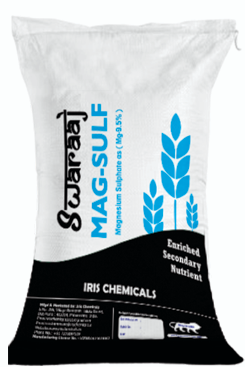
Magnesium Sulphate (Mg-9.5%)
• Magnesium Sulphate is a water-soluble fertilizer
that provides plants with magnesium, an
essential macronutrient required for chlorophyll
synthesis, enzyme activation & photosynthesis.
• In addition to Magnesium, Magnesium Sulphate
also supplies Sulphur to plants. Sulphur is necessary
for protein synthesis, amino acid formation &
overall plant metabolism.
• Magnesium is crucial for maintaining nutrient
balance within plants, as it plays a role in the
uptake and utilization of other essential nutrients,
including Nitrogen Phosphorus & Potassium.
• Magnesium Sulphate enhances the absorption &
transportation of nutrients within plants, leading to
improved nutrient uptake efficiency and overall
nutrient used by crops
|
agnesium (as Mg) as % by weight, min.
|
9.5
|
|---|---|
|
Sulphate sulphur(as S)
% by weight, min.
|
12
|
|
pH(5% Solution) @ 20 C
not less than
|
5.5-8.0
|
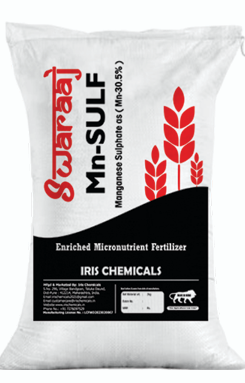
Manganese Sulphate (Mn-30.5%)
• Manganese is an essential micronutrient for plants,
playing a vital role in various physiological
processes such as photosynthesis, enzyme
activation and Nitrogen metabolism.
• Mn helps to regulate auxin levels, a plant hormone
responsible for growth and development.
• Proper auxin balance influences root growth,
flowering and overall plant health.
• It contributes to a robust immune system,
protecting crops from pathogens.
• Manganese Sulphate can help improve soil quality
by promoting microbial activities and nutrient
availability. It aids in maintaining soil pH levels and
overall soil fertility, which is crucial for sustainable
agriculture practices
|
Manganese (as Mn) as % by weight, min.
|
30.5
|
|---|---|
|
Sulphate sulphur(as S)
% by weight, min
|
17
|
|
pH(5% Solution) @ 20 C
not less than
|
4
|
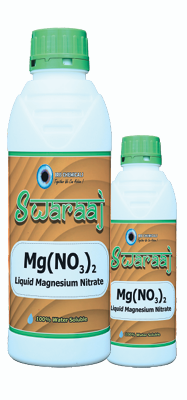
Mg(NO3)2 Liquid Magnesium Nitrate
Essential Secondary Nutrient : Nitrogen fortified with
Magnesium
•Increases the amount of chlorophyll and keeps the
crops green.
•It is essential for enzyme formation.
•Enhances carbohydrate usage in plants.
•Accelerates enzymes production of sugar.
•Helps in increasing new crop branches and germs.
•Improves nitrogen and phosphorous uptake by crops
|
Total Nitrogen N % by weight min
|
6.0
|
|---|---|
|
Water Souble Magnesium MgO% by weight min
|
5.0
|
|
pH(1% Solution) @ 20 C
|
7.0- 7.5
|
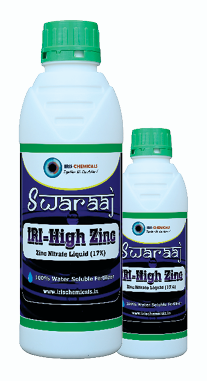
IRI-High Zinc Zinc Nitrate Liquid(17%)
•It rapidly supplies zinc to crops, which is essential for enzyme activation,
protein synthesis & overall plant growth. This helps in maintaining
membrane stability, improving water relations & enhancing nutrient
uptake.
•IRI-High Zinc usage reduces flower & fruit drops.
•Promotion of Crop Yield and Quality: Zinc application boosts
photosynthesis, chlorophyll formation and carbohydrate metabolism,
leading to higher yields and better crop quality
•Mitigation of Heavy Metal Toxicity: It can counteract the adverse effects
of heavy metals in soil by improving antioxidant defenses & osmolytes
accumulation in plants.
•Nitrogen Supplementation: The nitrate form provides readily available
nitrogen, supporting vegetative growth without the risks associated
with ammoniacal forms. Versatility Across Crops: Suitable for
deciduous fruits, nuts, citrus, vegetables, row crops, turf & ornamentals,
making it a flexible tool for sustainable agriculture.
•Overall, it offers a simple, effective solution to zinc-deficient soils,
enhancing farmer income through increased productivity
|
Zinc% by weight min
|
17%
|
|---|---|
|
Total Nitrogen% by weight min
|
7%
|
IRI-CANE (8-8-8 2S) Fortified with Trace Elements
• Nitrogen (N): Promotes leafy growth and overall plant
vigor in sugarcane.
• Phosphorus (P): Supports flowering, root development
and protein production.
• Potassium (K): Enhances stress tolerance,
photosynthesis, & carbohydrate translocation.
• 8:8:8 fertilizer is suitable for various crops, including
sugarcane.
• It is best suitable during the early stages of sugarcane
planting, for optimum functioning of all processes in th
plant .
• The balanced NPK ratio encourages vibrant foliage and
optimal photosynthes
|
Nitrogen % by weight, min.
|
8%
|
|---|---|
|
Phosphorous (as P O ) % by weight, min. 2 5
|
8%
|
|
Potash (as K O) % by weight, min. 2
|
8%
|
|
pH
|
6-7
|
|
specific gravity
|
1.1 to 1.22
|

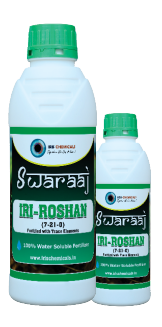
IRI-ROSHAN (7-21-0) Fortified with Trace Elements
7-21-0 Liquid fertilizers are commonly used as starter
fertilizers during planting
•Crucial for plant vigor, leaf development and overall
growth & healthy photosynthesis leads to better plant
growth and productivity.
•Adequate nitrogen ensures healthy crop establishment.
•Phosphorus is essential for root development, flowering,
and fruiting.
•7-21-0 Liquid fertilizers promotes strong roots
development, enhance nutrients uptake and overall
plant health
|
Nitrogen % by weight, min.
|
7
|
|---|---|
|
Phosphorous (as P O ) % by weight, min. 2 5
|
21
|
|
pH
|
6-7
|
|
Specific gravity
|
1.1 to 1.2
|
IRI-SAMPANN (6-0-18) with Trace Element Calcium, Magnesium & Boron (Suspension)
•The 6-0-18 composition indicates a high potassium (K)
content, which is essential for overall plant health.
Additionally, incorporating calcium (Ca) and magnesium
(Mg) into the fertilizer provides balanced macronutrients
that are crucial for various plant functions, including
cell structure.
•6-0-18 plays a significant role in enhancing soil structure,
this can lead to better aeration, water infiltration, & root
penetration, ultimately improving crop growth & yield.
• 6-0-18 along with calcium, magnesium, and boron,
farmers can expect benefits such as improved nutrient
availability, enhanced plant growth and development,
increased yield, better soil health, and increased
resilience to various stress factors
|
Nitrogen % by weight, min.
|
6
|
|---|---|
|
Phosphorous (as P O ) % by weight, min. 2 5
|
0
|
|
Potash (as K O) % by weight, min. 2
|
18
|
|
6-7
|
|
|
specific gravity
|
1.1 to 1.2
|

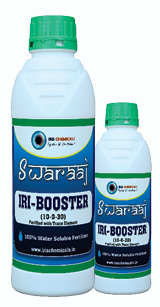
IRI-BOOSTER (10-0-30) Fortified with Trace Elements
•Promotes Flowering and Fruit Development.
•Enhances Plant’s Resistance against diseases &
environmental stress.
•Improves Nutrient Transport : 10-0-30 to improved
growth rates, healthier foliage and better nutrient
distribution throughout the plant.
•10-0-30 fertilizers promotes strong root growth, which
is crucial for anchoring plants, absorbing water,
nutrients & supporting above-ground growth.
•10-0-30 fertilizers can contribute to higher crop yield
and improved quality parameters such as fruit size,
flavor, and shelf life.
|
Total Nitrogen % as N
|
10
|
|---|---|
|
Total Nitrogen % as N
|
10
|
|
Potash (as K O) % by weight, min.
|
30
|
|
Specific Gravity @ 27 C
|
1.2 to 1.4
|
|
pH of 5% aqueous solution
|
6 to 7
|
|
Boron % (max)
|
0.5
|
|
Zinc % (max)
|
0.5
|
IRI-High Zinc Zinc Nitrate Liquid(17%)
•It rapidly supplies zinc to crops, which is essential for enzyme activation,
protein synthesis & overall plant growth. This helps in maintaining
membrane stability, improving water relations & enhancing nutrient
uptake.
•IRI-High Zinc usage reduces flower & fruit drops.
•Promotion of Crop Yield and Quality: Zinc application boosts
photosynthesis, chlorophyll formation and carbohydrate metabolism,
leading to higher yields and better crop quality
•Mitigation of Heavy Metal Toxicity: It can counteract the adverse effects
of heavy metals in soil by improving antioxidant defenses & osmolytes
accumulation in plants.
•Nitrogen Supplementation: The nitrate form provides readily available
nitrogen, supporting vegetative growth without the risks associated
with ammoniacal forms. Versatility Across Crops: Suitable for
deciduous fruits, nuts, citrus, vegetables, row crops, turf & ornamentals,
making it a flexible tool for sustainable agriculture.
•Overall, it offers a simple, effective solution to zinc-deficient soils,
enhancing farmer income through increased productivity
|
Zinc% by weight min
|
17%
|
|---|---|
|
Total Nitrogen% by weight min
|
7%
|

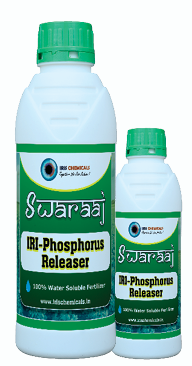
IRI-Phosphorus Releasor (9-0-16)
Swaraaj Phosphorus Releasor contains low molecular
weight carboxylates, with the ability to break down
various phosphate salts stuck up in soil, into crop
available form
• The carboxylates in Swaraaj Phosphorus Releasor will aid
plant growth by Releasing soil-bound manganese & other
micro-nutrients.
• Acting as a molecular shortcut in the Kreb's Cycle, once
absorbed by the plant.
• Feeding saprotrophic fungi which will degrade organic matter
in the soil and release other bound nutrients
• Swaraaj Phosphorus Releasor allows farmer to ensure plants
meet their phosphorus needs without applying phosphates.
•Phosphorus Releasor is far more effective and reliable than
microbial products that claim to free bound phosphorus and is
effective within a wide temperature range.
• The product is biodegradable, contains no heavy metals & is
not classified as hazardous to the environment.
|
Total Nitrogen % as N
|
10
|
|---|---|
|
Total Nitrogen % by weight, max.
|
5
|
|
Potash (K O)% by weight, min.
|
42
|
|
pH
|
7.00 to 8.20
|
|
Specific gravity
|
1.46
|
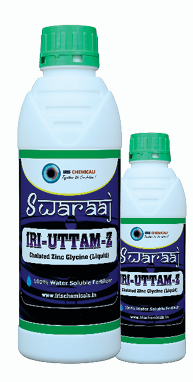
IRI-UTTAM-Z Chelated Zinc Glycine (Liquid)
• Chelated Zinc Glycine enhances the availability &
uptake of zinc by plants. Zinc is an essential
micronutrient that plays a vital role in various
biochemical processes, including enzyme activation,
protein synthesis, and hormone regulation.
• Chelated Zinc Glycine promote healthy plant growth &
development. Zinc is involved in cell division, root
development, leaf expansion, & overall plant vigor.
• Chelated Zinc Glycine can help the plants to withstand
environmental stresses, pathogens, diseases, leading to
healthier & more resilient crops.
• Chelated zinc glycine formulations are designed to be
environmental friendly, minimizing the risk of nutrient
leaching and run off.
|
Zinc (as Zn)percent by wieght, min
|
6.8
|
|---|---|
|
Specific Gravity
|
1.21-1.28
|
|
pH(1% Solution) @ 20 C
|
4.0- 5.5
|
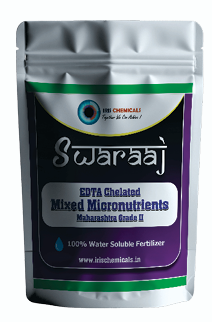
Mixed Micronutrients-Gr II EDTA Chelated (Maharashtra Grade II)
•Chelating Agent: EDTA is a chelating agent that forms
stable complexes with metal ions, preventing them from
becoming insoluble or unavailable to plants in soil
solutions.
• Corrects Micronutrient Deficiencies : Mixed
Micronutrient-Gr II (EDTA Chelated) can helps address
deficiencies of essential trace elements in plants, which
are oen limiting factors for growth and productivity.
•Promotes Healthy Growth : By supplying a balanced mix
of micronutrients, this fertilizer supports various
physiological processes including photosynthesis,
enzyme activation and nutrients transportation.
•Improves Yield and Quality : Proper micronutrients
contribute to increased crop yield, improved fruit quality
and overall plant vigor.
|
Fe % by weight, min.
|
2.5
|
|---|---|
|
Mn % by weight, min.
|
1.0
|
|
Zn % by weight, min.
|
3.0
|
|
Cu % by weight, min.
|
1.0
|
|
Molybdenum % by weight, min.
|
0.1
|
|
Boron % by weight, min.
|
0.5
|
|
pH
|
6.0-8.0
|
|
All are EDTA Chelated Micronutrients
|
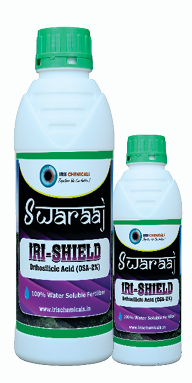
IRI-SHIELD Orthosilicic Acid OSA-2%
•Orthosilicic acid boosts the plant's natural defense
mechanisms, leading to increased resistance against
fungal diseases, bacterial infections, and certain pests.
•Orthosilicic acid promotes robust root development
resulting in increased root mass, depth and exploration
of soil volume.
•The application of orthosilicic acid can lead to higher
crop yields and improved quality parameters such as
fruit size, color, flavor, and shelf life. It also enhances
seed germination and seedling vigor.
•Compatible with Other Inputs: Orthosilicic acid can be
used in conjunction with other fertilizers, pesticides &
growth stimulants without any adverse effects.
• It complements integrated pest management (IPM) &
nutrient management strategies.
|
Orthosilicic Acid [Si(OH) ], by percent by weight , min
|
2.0
|
|---|---|
|
pH(1% Solution) @ 20 C
|
1.7- 2.2
|
|
Specific Gravity
|
1.07- 1.15
|